
How to Build a Standout Litigation SEO Page in a Crowded Legal Search Landscape
Firms with large marketing budgets dominate paid placements. But the big sharks aren’t the only competition for visibility smaller firms have to compete with. Add news outlets, advocacy organizations and legal aggregators to the mix and the quest for organic visibility seems impossible. For firms without unlimited ad spend, is it possible to compete organically at all?
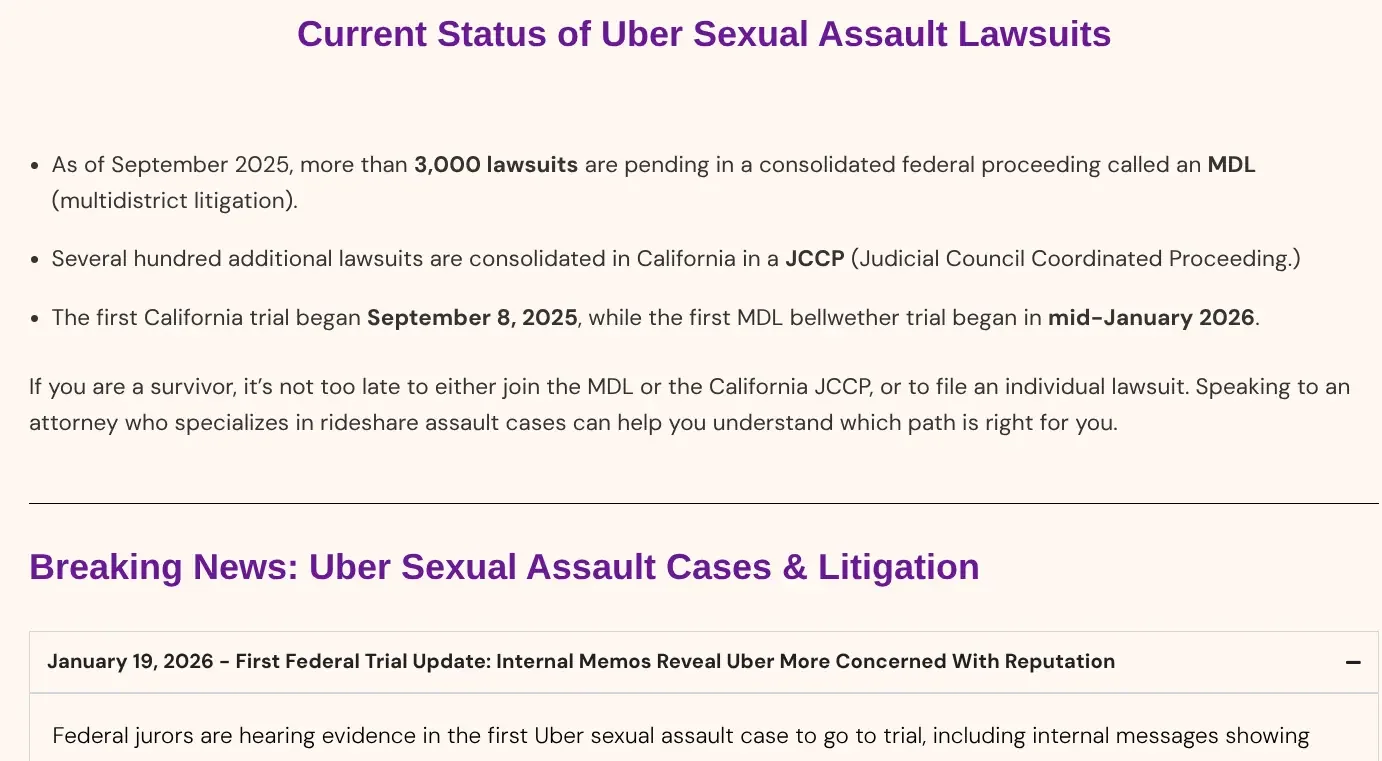
Let’s use the Uber Sexual Assault Lawsuit Guide that Law Firm Content Manager created to answer that question.
Rather than relying on paid traffic, the page was designed around originality, depth, and editorial judgment, along with a long-form SEO strategy.
What Organic Search Rewards in Competitive Litigation Topics
In saturated practice areas, search engines tend to surface pages that demonstrate more than keyword alignment. Visibility increasingly depends on whether content shows original analysis rather than recycled summaries, comprehensive coverage rather than surface-level explanations, clear structure that supports long engagement, and ongoing updates that reflect evolving litigation.
In other words, organic performance becomes less about who spends the most and more about who publishes the most useful resource.
The Uber guide was intentionally constructed as a durable reference rather than a disposable landing page. At approximately 8,000 words, it addresses the legal landscape in a way many firms assume requires massive budgets, when in reality it requires a sharp editorial eye.
Originality as a Competitive Advantage
One of the most common failures in legal SEO is sameness. Pages repeat identical talking points, paraphrase the same news articles, and differ only in firm branding. Over time, this sameness limits both credibility and search performance.
The Uber Sexual Assault Lawsuit Guide took a different approach by clearly separating criminal allegations from civil liability theories, explaining procedural realities such as multidistrict (MDL) litigation in plain language, and incorporating verified updates tied to actual case developments and reporting.
For firms competing organically, originality is a prerequisite for attracting potential plantiffs’ attention.
Depth, Structure, and Search Intent Alignment
Long-form content only works when it is navigable. The guide was structured so readers could move by topic, question, or level of familiarity without being overwhelmed.
From an SEO perspective, this served two purposes. It allowed the page to naturally capture a wide range of related search queries, and it encouraged longer engagement by answering questions fully rather than deflecting them into generic calls to action.
Competing Without Paid Placement
Large firms will always have an advantage in paid search. That reality does not change. What does change is organic visibility for thin or derivative content.
The Uber Sexual Assault Lawsuit Guide demonstrates how firms without unlimited ad budgets can remain competitive by investing in content that is substantive rather than promotional, updated rather than static and written to answer questions that survivors are desperately searching for.
In crowded legal search landscapes, those qualities often determine whether a firm is discoverable at all.
What Smaller Firms Can Take From This
Smaller and mid-sized firms do not need to outspend national players to compete in organic search. They need to out-execute them editorially.
That means committing to original analysis rather than repackaged summaries, building pages that answer real legal questions completely, structuring content for clarity and navigation, and treating SEO pages as living resources that evolve with the litigation.
The Uber guide shows that when content is built with those priorities, organic visibility becomes achievable, even in one of the most competitive plaintiff-side practice areas online.
Need A New Content Strategy?
If you’re interested in building long-form legal content that competes organically in crowded practice areas without relying on paid traffic or sensationalism, request a consultation.
